Fang Lab · School of Life Sciences
Biomolecular condensates
in plant-environment
interactions
Our research focuses on how biomolecular condensates help plant cells perceive environmental fluctuations and coordinate adaptive gene regulation under stress.
The Role of Biomolecular Condensates in Plant-Environment Interactions
Eukaryotic cells are physically compartmentalized to ensure the efficiency and efficacy of biochemical reactions and cellular functions. Biomolecular condensates, which lack a surrounding lipid membrane, represent a unique mode of compartmentalization. They offer broad advantages over membrane-bound organelles due to their ability to assemble and dissolve spontaneously and rapidly. In most cases, biomolecular condensates are assembled through liquid–liquid phase separation (LLPS) of proteins and/or RNAs. Within a eukaryotic cell, numerous biomolecular condensates are spatially and temporally localized.
Read the full programme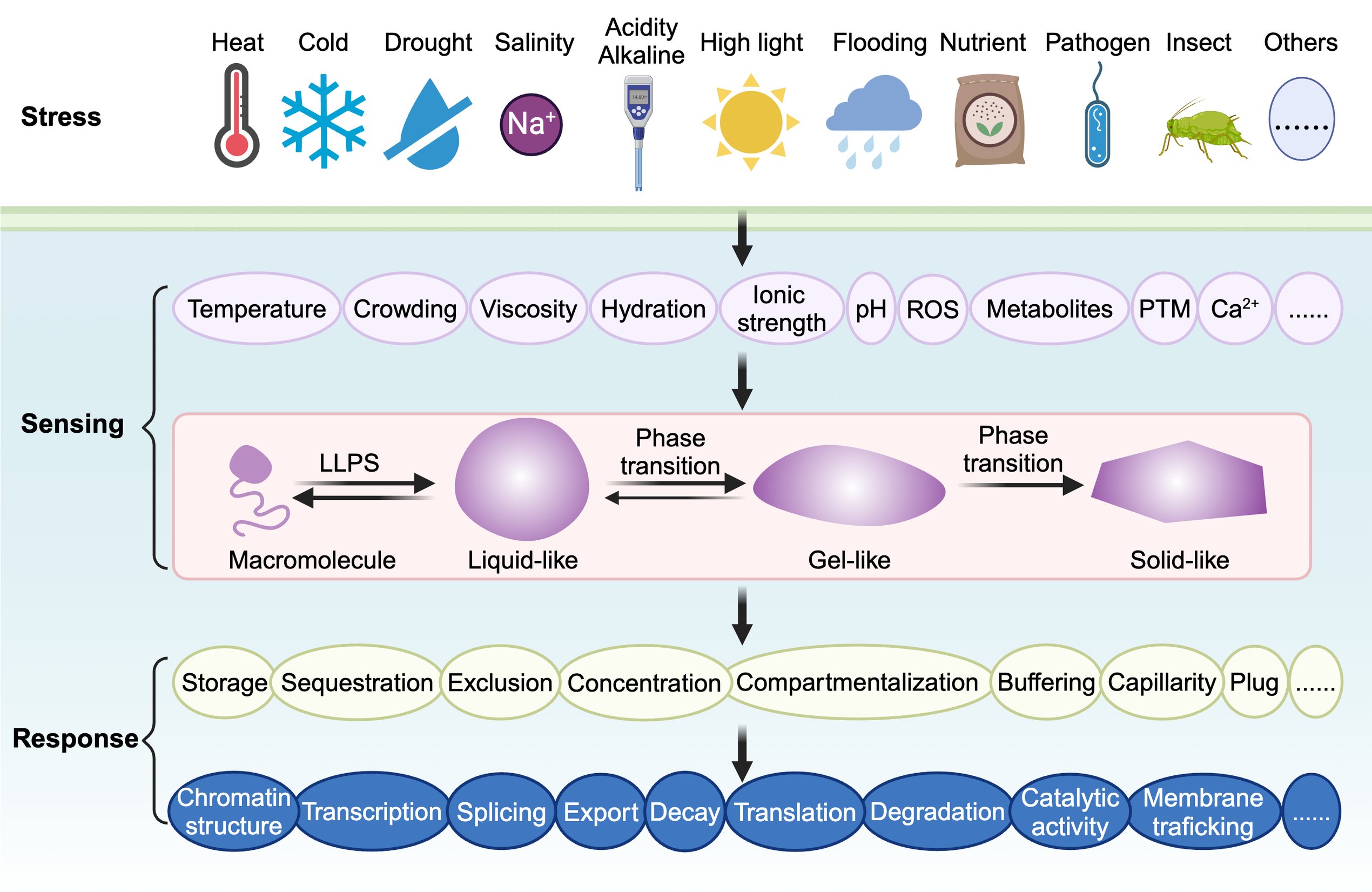
Items marked Tsinghua News or WeChat are collected monthly from the School of Life Sciences website and its WeChat account.